
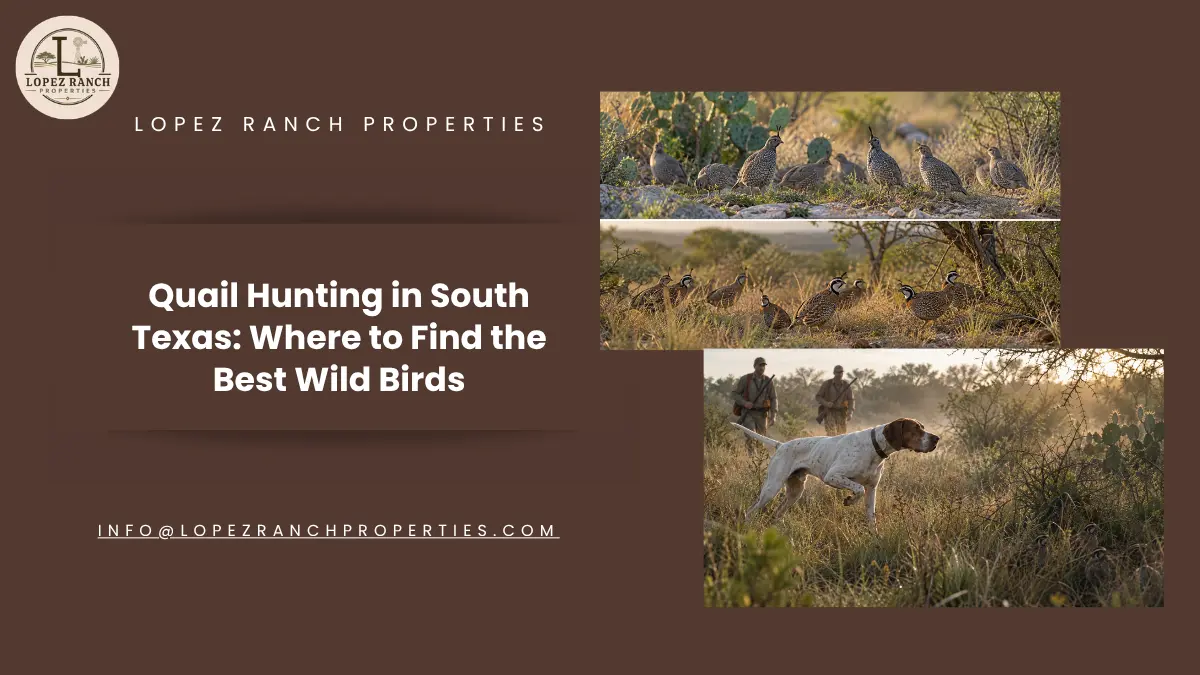
The best wild quail hunting in Texas is in the South Texas brush country. The region’s dense native cover holds stronger, more stable bobwhite numbers than anywhere else in the state, which is why serious upland hunters keep pointing their trucks south. The season runs November through February, and the birds here are wild, not pen-raised.
A good quail hunt lives or dies on two things: the ground you hunt and whether the birds are real. Get both right, and you get the thing that made people fall in love with upland hunting: a dog locked on point, the covey rise, the scramble. Get them wrong, and you get a walk in the heat. Here’s where South Texas fits, when to go, and what to check before you book.
Key Takeaways
- Brush country habitat is the real reason South Texas outperforms the rest of the state for wild quail, not tradition or reputation.
- Texas quail season runs November 1, 2026 to February 28, 2027, with early and late season offering noticeably different hunts.
- South Texas holds both bobwhite and scaled (blue) quail, and wild coveys behave nothing like released birds.
- Property management, pressure limits, habitat upkeep, and trained dogs matter as much as the region itself.
- A trip built around the right timing and the right land beats one built around convenience.
Why the Brush Country Grows Better Quail Than the Rest of the State
Bobwhite quail need three things in roughly equal measure: dense low cover to hide from predators, open ground nearby to feed, and a steady insect supply while chicks are young. Most Texas regions offer one or two. The South Texas brush country offers all three at once, and that’s the whole story behind why covey counts hold up better here than in the Panhandle or the Hill Country, where drought years hit populations much harder.
That doesn’t mean South Texas never has a rough year. It does. But the mesquite and native grass structure gives quail more places to ride out a dry stretch and rebuild the following season; resilience the landscape simply doesn’t offer everywhere. In TPWD’s annual Quail Roadside Survey, the South Texas Plains has repeatedly stood out as a region where bobwhite abundance held steady or climbed in years when other parts of the state fell off.
One more thing worth knowing: South Texas holds two huntable quail species, not one. The bobwhite is the classic bird most hunters are after, but scaled quail, “blue quail,” the ones that would rather run than fly, share the same country, and a mixed bag of bobs and blues is a normal South Texas day.
Quail Season in South Texas: Timing Your Trip Right
Quail season in South Texas runs statewide from November 1, 2026 to February 28, 2027, with a daily bag limit of 15 quail in the aggregate. You’ll need a valid Texas hunting license plus an Upland Game Bird Endorsement to hunt them. Season dates and limits are set by Texas Parks & Wildlife and can shift year to year, so confirm the current regulations before you travel.
That four-month window isn’t one uniform experience, though, and knowing the difference is worth sorting out before you book, not after.
Early season: tighter-holding birds. Early on, coveys sit tighter and hold longer for the dogs, since they haven’t been pushed much yet. Points last longer, flushes are more forgiving, and a first-time upland hunter usually gets far more out of an early-season trip.
Late season: a faster, harder flush. By late season, the birds still out there have survived several flushes already. They’re faster, wilder, and jumpier, a genuine test even for experienced hunters. If you want a technical, hard-won hunt, aim late.
Neither end is objectively better. Match the season to the group, and everyone has a better day.
Why Wild Quail Season Draws Hunters From Out of State
Quail season in South Texas has become enough of a draw that a large share of bookings now come from hunters traveling in Oklahoma, Kansas, and the Midwest in particular, regions where wild quail numbers have declined hard over the past two decades. For those hunters, South Texas isn’t just a good option. It’s often the only realistic place left to hunt genuinely wild bobwhite without relying on stocked birds. That scarcity everywhere else is exactly what makes the brush country worth the drive.

Wild Birds vs. Put-and-Take Hunts: The Difference Nobody Tells You Upfront
Here’s something a lot of first-time quail hunters don’t find out until they’re already standing in the field: not every “quail hunt” involves wild birds. Plenty of operations across the state release pen-raised quail the morning of the hunt. Those birds fly straight and predictable, hold less naturally, and give a dog almost nothing to actually work.
A genuinely wild covey is a different animal, literal survivors that scatter unpredictably and force a dog to read scent, not just chase movement. South Texas is one of the few places left with wild populations dense enough to hunt without releasing birds to fill out the day.
If the hunt matters to you as an experience and not just a body count, this is the single most important question to ask any outfitter before booking: are the birds wild, or released? A straight answer tells you almost everything about the hunt you’re about to pay for.
What to Bring on a South Texas Quail Hunt
Brush country punishes underprepared gear more than open-field hunting does. Four things matter more here than on a typical upland hunt:
- Brush pants or chaps – mesquite thorns and prickly pear go through regular jeans without much resistance.
- Snake boots – the brush holds rattlesnakes, and thick cover means less visibility underfoot than open fields.
- A lighter shotgun – flushes tend to happen fast and close, so a gun that swings quickly beats one built for long-range shots.
- Sun protection and water – even in late fall and winter, South Texas afternoons run warm, and you’ll spend hours exposed with little shade.
What Separates a Good Quail Property From a Great One
The region gets you in the right zip code. The property decides your actual hunt. Before you book, check these five things:
| What to check | Why it actually matters |
|---|---|
| Acreage and habitat condition | More intact brush country generally holds more birds |
| Wild birds, confirmed | The difference between hunting and shooting released quail |
| Trained pointing dogs | Determines whether coveys get found or walked past |
| Rotation and pressure limits | Overhunted ground burns out fast; managed ground doesn’t |
| Group and pacing flexibility | A family outing and a corporate group need different setups |

Experience Guided Wild Quail Hunting with Lopez Ranch Properties.
Lopez Ranch Properties manages more than 13,000+ acres of South Texas brush country between Zapata and Hebbronville, about an hour from Laredo, and it’s managed specifically to sustain wild bobwhite, not stocked birds. The ranch stayed closed to all but family and friends for generations, so the ground hasn’t been pressured the way public land and high-traffic leases have.
Hunting pressure is rotated across the property through the season, so coveys aren’t hammered early and left thin by January. Our guides run trained pointers that know the country well enough to work it efficiently instead of wandering.
We host private groups and corporate outings, with lodging and meals available for a full stay built around the hunt. One thing to know before you book: our guided hunts run for groups with a minimum of 8 hunters per hunt. If you’re putting a group together for the season, see our wild quail hunts and request dates early; the best windows go fast.
Conclusion
The reason South Texas keeps coming up as the answer to “where’s the best wild quail hunting in Texas” isn’t luck or legend; it’s habitat that actually supports quail through good years and bad, paired with land management that protects covey numbers instead of burning through them. Get the timing right, get the property right, and it’s still possible to have the kind of hunt that made people fall for this sport in the first place.
Frequently Asked Questions
1. Where is the best wild quail hunting in Texas?
The brush country of South Texas consistently produces the strongest wild bobwhite numbers in the state, thanks to habitat that holds up better through dry years than most other regions.
2. When is quail season in South Texas?
Texas quail season runs statewide from November 1, 2026 to February 28, 2027, with a daily bag limit of 15 quail. You’ll need a hunting license and an Upland Game Bird Endorsement. Always confirm current dates and limits with Texas Parks & Wildlife before you travel.
3. What time of year is best for a quail hunt in South Texas?
Early season (November–December) suits hunters wanting tighter-holding birds and more forgiving flushes; late season (January–February) suits those wanting a faster, wilder, more challenging hunt.
4. How can you tell if a quail hunt uses wild birds or released birds?
Ask directly before booking. Wild birds scatter unpredictably and test a dog’s nose; released birds fly in straight, predictable patterns and offer far less of a real hunting challenge.
5. Does South Texas have quail every year, even in dry seasons?
Numbers can dip in drought years, but the region’s brush cover gives quail more places to survive and recover than most other parts of the state, so populations tend to rebound faster.
6. What should you look for before booking a quail hunting property?
Confirm the birds are wild, check that the property limits hunting pressure across the season, and ask whether trained bird dogs are part of the guided hunt.