Usually, no. On private land with the landowner’s consent, you do not need a Texas hunting license to hunt feral hogs, and that applies to residents and non-residents alike. A license is only required on public land. Either way, there’s no hog tag, no bag limit, and no closed season on private property.
This surprises a lot of hunters, because it’s the opposite of how every other Texas game animal works. But Texas wants feral hog numbers down, so since 2019 the state has made hogs about the easiest thing to legally hunt in the whole state. Here’s exactly when you need a license, when you don’t, and how the rule plays out for guests, leases, and out-of-state hunters.
Key Takeaways
- On private land with the landowner’s consent, no hunting license is required to hunt feral hogs, for residents or non-residents.
- That exemption covers guests, lease-holders, and guided hunters, not just the landowner. Consent is what matters.
- A hunting license is required to hunt hogs on public land, along with an Annual Public Hunting Permit.
- Feral hogs carry no bag limit and no closed season on private property, and there’s no special hog tag or permit.
- Hunter Education is still required for anyone born on or after September 2, 1971, license or not.
- It’s still illegal to hunt hogs without a license if you don’t have the landowner’s consent.
What the Law Actually Says About Hunting Hogs in Texas
Feral hogs sit in a strange middle ground. They’re not native to Texas, they’re not managed as a game species, and the state actively wants their numbers reduced. That’s why the licensing rules for hogs look nothing like the rules for deer or quail.
The key change came with Senate Bill 317, which took effect September 1, 2019. It amended the Texas Parks & Wildlife Code so that any person, resident or non-resident, may take feral hogs on private land, with the landowner’s consent, without a hunting license. According to Texas Parks & Wildlife, the law removed the old requirement that hogs had to be causing damage, and it dropped the earlier “landowner’s agent or lessee” language, so the exemption now covers anyone the landowner allows to hunt.
Before 2019, the rule was narrower and easy to misremember: only a landowner, their agent, or a lessee could hunt hogs without a license, and only when the hogs were causing depredation. That’s the old rule a lot of hunters still repeat. The current rule is simpler and broader: consent on private land is the whole test.
Hunting Hogs on Private Land: When You Don’t Need a License
On private property, the license question comes down to one word: consent. If the landowner has given you permission to hunt, you can hunt feral hogs without a Texas hunting license, whether you’re a Texas resident or visiting from out of state.
That’s the part people misread most. The exemption isn’t limited to the landowner and their family. It reaches anyone the landowner allows onto the property to hunt: a friend, a guest, someone on a hunting lease, or a client on a guided hunt. What matters legally is the landowner’s consent, not who owns the land.
A couple of honest boundaries worth knowing:
- No consent, no exemption. Hunting hogs without the landowner’s permission is still illegal, license or not.
- The paid-hunt paperwork is the landowner’s job, not yours. A ranch that offers hog hunting for money still needs a hunting lease license from TPWD, but that’s on the operator. As a guest, you’re covered by the consent exemption.
- Hunter Education still applies. If you were born on or after September 2, 1971, you still need Hunter Education certification, even when no license is required.
Why There’s No Special Hog Permit in Texas
Even when a license does come into play, there’s no hog-specific paperwork stacked on top of it. Compare that to quail, which need an Upland Game Bird Endorsement, or waterfowl, which need state and federal stamps. Hogs skip all of it: no tag, no per-animal count to track, no season dates to plan around on private land.
That’s a big part of why hog hunting has become such an easy entry point for newer hunters. On private ground, the paperwork is about as simple as Texas hunting gets: get the landowner’s okay, make sure your Hunter Education is squared away if it applies to you, and go.
When You Do Need a License: Public Land
The one place the exemption stops is public land. Hunting feral hogs on public hunting land requires a valid Texas hunting license, plus an Annual Public Hunting (APH) Permit. Hunter Education rules apply there too.
If you’re hunting public land, or you’d simply rather carry a license, getting one is quick:
- In person: Sporting goods stores, license retailers, and many outfitters can issue a license on the spot. Bring a photo ID; if you were born on or after September 2, 1971, bring proof of Hunter Education.
- Online: You can buy a Texas hunting license online through TPWD, with digital delivery to your phone. Having your Hunter Education number handy is the one thing that speeds up an otherwise quick checkout.
A standard hunting license covers hogs the same as any other game; there’s no separate hog license to add.
Licensing for Non-Resident Hog Hunters
Here’s the good news for out-of-state hunters: the private-land exemption applies to you exactly the same as it does to Texas residents. Hunt feral hogs on private property with the landowner’s consent, and you don’t need a Texas hunting license at all. That’s a big reason so many hog hunters travel in from other states; the barrier to entry is almost nothing.
You’d only need a non-resident license if you plan to hunt hogs on public land. If that’s the case, Texas offers a non-resident general hunting license and a lower-cost 5-day option for short trips; confirm which fits your visit, since coverage and trip length differ. License fees change periodically, so check current pricing directly with TPWD.
Hog Hunting License Rules at a Glance

Questions Hunters Actually Ask Before a Hog Hunt
If I’m helping a landowner manage hogs on their property, do I need a license?
No, as long as you have the landowner’s consent, you can hunt feral hogs on their private land without a license, whether you’re family, a friend, a neighbor, or hired help. Consent is the test, not your relationship to the owner.
Does a fishing license cover hog hunting?
No. Fishing and hunting licenses are separate in Texas, and a fishing license doesn’t authorize hunting of any kind. On private land with consent, though, you may not need any license at all.
Can hogs be hunted at night without a license?
Night hunting and licensing are two separate questions. On private land with the landowner’s consent, no license is required day or night; night-hunting methods (lights, thermal, etc.) have their own rules, so confirm those with the landowner and TPWD.
Does hunting from a helicopter change the license requirement?
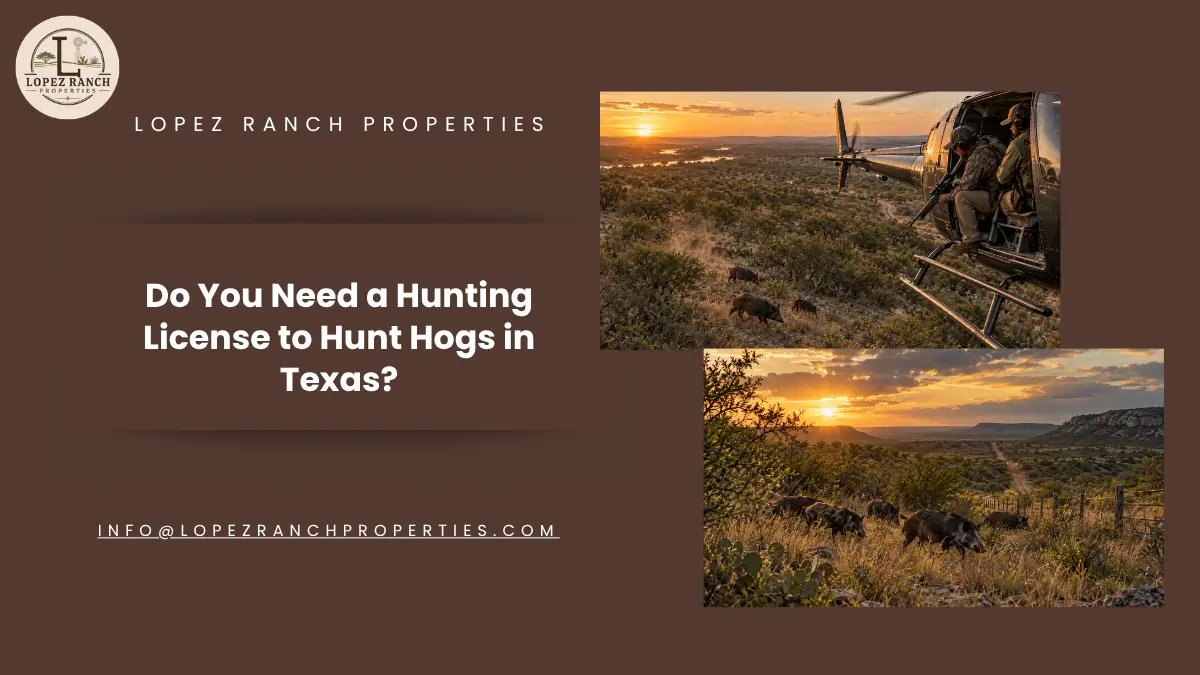
On private land with landowner consent, you still don’t need a hunting license to take hogs from a helicopter. Aerial hog hunts run under a separate framework; the operator holds an Aerial Wildlife Management permit and a landowner authorization, so the paperwork sits with the outfitter, not the guest.
Come Hunt Hogs at Lopez Ranch Properties, No License Required
Here’s the best part for anyone who’d rather skip the paperwork and just hunt: because our hog hunts are on private ranch land with our consent, you don’t need a Texas hunting license to hunt with us. Residents and out-of-state guests alike, just bring your Hunter Education certification if it applies to you, and you’re set.
Lopez Ranch Properties is a family-owned ranch spanning more than 10,000 acres of South Texas brush country, and we’d love to have you out. We run guided hog hunts, including helicopter hog hunts, with guides who handle every logistical detail so you can focus on the hunt itself. Come for the hogs, stay for the country: we host private groups and corporate outings, with lodging and home-style meals available for groups staying over.
One thing to know as you plan: our guided hunts run for groups, with a minimum of 3 hunters per hunt. Put your group together, book a helicopter hog hunt, and we’ll take care of the rest.

Conclusion
Hunting hogs in Texas comes with fewer rules than almost any other game animal, and on private land with the landowner’s consent, that includes no hunting license at all, for residents and non-residents alike. A license only comes into play on public land. Hunter Education still applies based on your birth date, not on what you’re hunting. Sort those two things out, and hog hunting is about as accessible as Texas hunting gets.
Frequently Asked Questions
1. Do you need a license to hunt hogs in Texas?
Not on private land. With the landowner’s consent, any hunter, resident or non-resident, can hunt feral hogs on private property without a Texas hunting license. A license is only required on public land.
2. Can guests or guided hunters hunt hogs without a license?
Yes. Since 2019, the exemption covers anyone hunting with the landowner’s consent, including guests, lease-holders, and clients on guided hunts, not just the landowner and their family.
3. Do non-residents need a license to hunt hogs in Texas?
No, not on private land with landowner consent; the exemption applies to non-residents exactly as it does to residents. A non-resident license is only needed for hunting on public land.
4. Is there a special permit or tag needed to hunt hogs in Texas?
No. There’s no hog-specific tag, endorsement, or permit. Where a license is required (public land), a standard hunting license covers hogs, plus an Annual Public Hunting Permit on public land.
5. Does hunting hogs require Hunter Education in Texas?
Yes, for anyone born on or after September 2, 1971. That requirement is tied to the hunter’s age, not the species, so it applies even when no license is required.
6. What happens if you hunt hogs without landowner consent?
Without the landowner’s consent, the exemption doesn’t apply, and hunting without a required license is illegal; it can bring citations regardless of whose land it was on.