
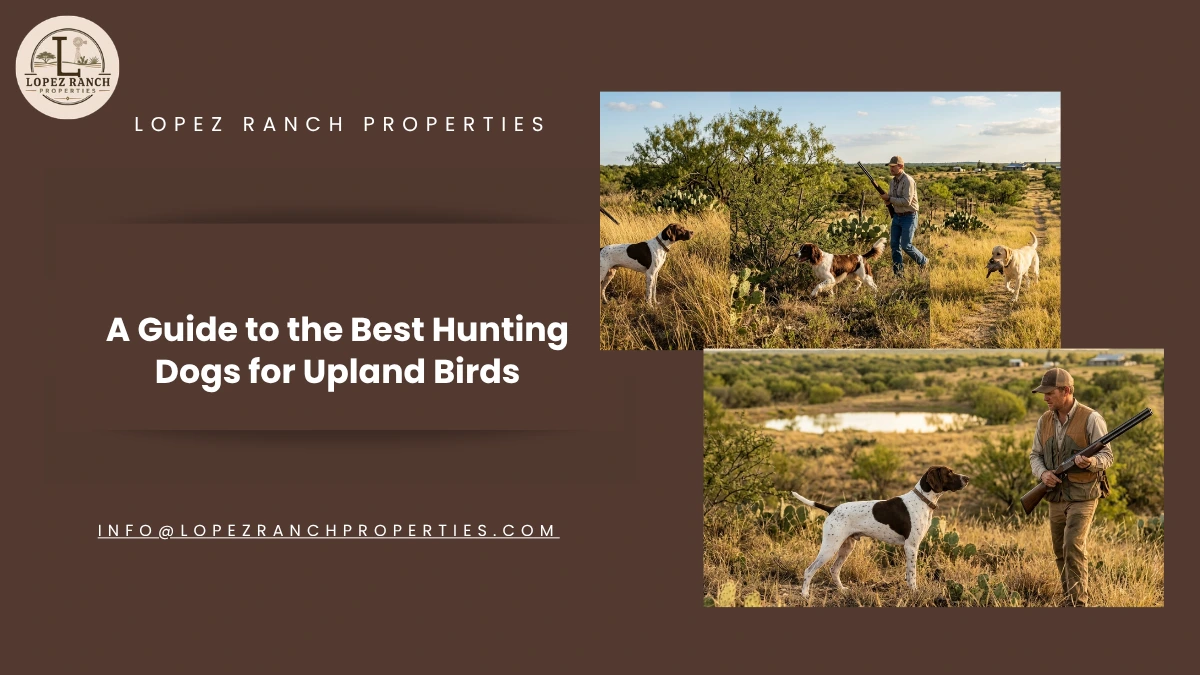
The best hunting dogs for upland birds are breeds developed to locate, point, or flush birds, and recover them after the shot. Popular choices include Pointers, German Shorthaired Pointers, Brittanys, setters, spaniels, and retrievers. The right dog depends on your terrain, preferred hunting style, training commitment, climate, and life outside the field.
Ask five bird hunters to name the best hunting dog, and you may get five different answers.
One hunter wants a Pointer that covers open country with speed. Another prefers a spaniel working close enough to stay within shotgun range. Someone who splits time between quail fields and waterfowl may want a versatile dog that can point on land and retrieve from water.
None of those hunters is necessarily wrong.
The best upland bird dogs aren’t chosen by popularity alone. A good match depends on the birds you hunt, the cover you walk, how far you want the dog to range, and how much time you can give it during the rest of the year.
What Does an Upland Bird Dog Actually Do?
Upland bird dogs help hunters find and recover game birds that spend much of their time on or near the ground.
Depending on the breed and its training, a dog may:
- Search likely cover for scent
- Point and hold where birds are located
- Flush birds into flight
- Stay within practical shotgun range
- Mark where a bird falls
- Find wounded or downed birds
- Retrieve birds gently to hand
- Work with another dog, guide, or hunting party
Quail, pheasant, grouse, woodcock, and prairie birds may all be hunted with trained bird dogs, though the ideal search pattern and pace can change with the species and terrain.
The North American Versatile Hunting Dog Association defines a versatile dog as one bred and trained to hunt and point game, retrieve on land and water, and track wounded game. NAVHDA currently recognizes 35 versatile breeds, which shows how many good options exist beyond the handful of names most hunters already know.
What Is the Difference Between Pointing, Flushing, and Retrieving Dogs?
Before comparing hunting dog breeds, it helps to understand the three main field styles.
Pointing Dogs
A pointing dog searches for bird scent and stops when it locates game. The dog may stand tall, crouch slightly, or lean forward, but the purpose is the same: show the hunter where the birds are holding without rushing into them.
Pointers, setters, Brittanys, Vizslas, and several Continental breeds fall into this group.
Pointing dogs are a natural fit for wild quail hunting because they give hunters time to approach, organize the shooting line, locate the other hunters, and prepare for the covey rise.
Flushing Dogs
A flushing dog works closer to the hunter and pushes birds from cover once it finds them.
Spaniels are the best-known flushing breeds. They can be especially useful in thick grass, brush, and smaller patches of cover where a wide-running dog might be harder to handle.
The hunter must stay ready because the dog may produce a bird quickly.
Retrievers
Retrievers are known for marking fallen birds, searching for wounded game, and bringing birds back without unnecessary damage.
Labrador and Golden Retrievers are strongly associated with waterfowl, but well-bred working retrievers can also hunt upland cover. Some hunters use them to flush birds, while others value them mainly for recovery after the shot.
Many versatile hunting dogs combine pointing and retrieving ability rather than fitting into only one category.
Which Hunting Dog Breeds Are Best for Upland Birds?
This table gives a practical comparison. It describes common working tendencies, not a promise about every individual dog. Breeding, training, experience, and handling can create major differences within the same breed.
| Breed | Main field style | Common strengths | Often suits hunters who want |
| Pointer | Pointing | Speed, range, open-country search | A hard-running specialist for large ground |
| German Shorthaired Pointer | Pointing and retrieving | Versatility, stamina, athleticism | One dog for several types of hunting |
| Brittany | Pointing and retrieving | Compact build, energy, responsiveness | A manageable pointing dog with plenty of drive |
| English Setter | Pointing | Scenting ability, graceful search, bird focus | A traditional upland pointing dog |
| Vizsla | Pointing and retrieving | Athleticism, cooperation, close bond | A dog that works closely with its handler |
| Wirehaired Pointing Griffon | Pointing and retrieving | Methodical search, rough coat, versatility | A closer-working dog for varied cover |
| English Springer Spaniel | Flushing and retrieving | Close work, stamina, strong flushing drive | A flushing dog for grass and thicker cover |
| Boykin Spaniel | Flushing and retrieving | Compact size, trainability, mixed-use ability | A smaller dog for upland and water work |
| Labrador Retriever | Flushing and retrieving | Marking, recovery, trainability | A retrieve-first dog with broad hunting ability |

Is the Pointer One of the Best Dogs for Open Upland Country?
The Pointer, often called the English Pointer, is built around one main job: finding and pointing game birds.
These dogs are known for athletic movement, high energy, and the ability to search a large area. The AKC describes pointing as the breed’s defining purpose and notes that Pointers have performed that work for centuries.
A Pointer can be a strong choice for:
- Large fields and open country
- Hunters who like a wide-ranging search
- Quail and prairie bird hunting
- Experienced handlers are comfortable managing the range
- Dedicated upland hunters who prioritize bird-finding speed
That range can also be a challenge. A big-running dog needs solid handling, dependable recall, conditioning, and regular opportunities to work.
For a hunter who wants a close dog that remains only a few yards away, some Pointer bloodlines may feel like too much dog. Field lines vary, so it’s important to see the parents work or speak with people who have hunted behind dogs from the same breeding.
Why Is the German Shorthaired Pointer So Popular?
The German Shorthaired Pointer is one of the most recognizable bird dog breeds because it can handle several jobs.
A good GSP may point upland birds, retrieve on land or water, track, and cover ground for long periods. The AKC describes it as a versatile gundog that needs vigorous exercise and consistent positive training.
Common reasons hunters choose a GSP include:
- Short, practical coat
- Strong athletic ability
- Pointing and retrieving instinct
- Suitability for several game species
- Enough range for open country
- Broad hunting versatility
The same energy that makes a GSP effective in the field can make it demanding at home. A short walk around the block usually won’t satisfy a young working-bred dog.
This is a breed for someone who enjoys training, exercise, and regular outdoor activity—not only a few weekends of hunting each year.
Is a Brittany a Good Bird Dog for Newer Handlers?
Brittanys are compact pointing dogs with plenty of energy and bird drive.
The AKC describes the breed as agile, versatile, energetic, and tireless in the field.
Many hunters like Brittanys because they offer pointing-dog ability in a smaller package than several of the larger continental breeds. Depending on the bloodline and training, they may work at a practical close-to-medium range and stay highly connected to the handler.
A Brittany may suit hunters who want:
- A lighter, more compact dog
- Pointing and retrieving ability
- An active home companion
- A dog that travels easily
- Plenty of energy without the size of a larger pointer
“Smaller” does not mean low energy. Brittanys still need steady exercise, bird exposure, obedience work, and mental activity.
They can be approachable for a first-time bird dog owner, but only when that owner is ready to train consistently.
What Makes the English Setter a Classic Upland Bird Dog?
The English Setter has a long history as a bird-finding dog.
Setters use scent to locate game and hold their position rather than chasing the bird. The English Setter was developed specifically for sporting work across British terrain, and the breed remains closely connected to upland hunting.
Hunters often value field-bred English Setters for:
- Strong bird-finding instinct
- A flowing, efficient search
- Natural pointing behavior
- Good endurance
- Traditional style behind wild birds
The feathered coat needs more attention than the coat of a Pointer or GSP. Grass seeds, burrs, and small pieces of brush can collect around the legs, ears, and underside.
There can also be a noticeable difference between dogs bred mainly for the show ring and dogs bred for field performance. Anyone buying an English Setter for hunting should focus on proven working lines, not appearance alone.
Is the Vizsla a Close-Working Hunting Dog?
The Vizsla is an athletic Hungarian gundog developed for long days in the field. It can point, retrieve, and work closely with its handler.
Vizslas are often known for forming a strong attachment to their owners. In the field, that can translate into a cooperative search and frequent contact with the handler.
They may appeal to hunters who want:
- A short-coated pointing breed
- An athletic dog for active households
- A closer working relationship
- Upland pointing and retrieving ability
- A dog that spends most of its time with the family
That close attachment also means many Vizslas don’t do well with long stretches of isolation. They need exercise, training, and regular involvement in daily life.
A hunter looking for a highly independent, far-ranging dog may prefer a different style. Someone who wants a bird dog and constant companion may find the Vizsla a good match.
When Is a Wirehaired Pointing Griffon a Good Choice?
The Wirehaired Pointing Griffon is a versatile pointing and retrieving breed known for its harsh coat and cooperative temperament.
The AKC describes the breed as hardworking, quick-witted, eager, and highly capable in the field.
Griffons often appeal to hunters who prefer:
- A deliberate, methodical search
- Pointing and retrieving ability
- A dog that generally stays connected to the gun
- A protective coat for rough or wet cover
- One breed for both upland and water work
A rough coat can offer protection, but it also needs maintenance. Seeds, burrs, and debris still need to be checked after a hunt.
Hunters in hot climates should also think about when and where the dog will work. Coat type is only one part of heat management. Conditioning, hydration, rest, pace, age, and the individual dog all matter.
Why Do Some Hunters Prefer English Springer Spaniels?
English Springer Spaniels don’t usually point. They work close, locate birds, and flush them into the air.
That style puts the hunter in the action quickly. It also keeps the dog within a practical working distance when properly trained.
The AKC describes the Springer as an energetic, intelligent bird dog with strong stamina and a long history as a working hunting companion.
Springers are especially useful for:
- Thick grass and brush
- Pheasant and mixed upland cover
- Hunters who prefer close dog work
- Walking hunts where birds need to be pushed from cover
- Hunters who want flushing and retrieving from one dog
A flushing dog must remain under control. If it ranges too far ahead, birds may rise outside shotgun range. Reliable quartering, recall, steadiness, and response to the whistle are central parts of its training.
Is the Boykin Spaniel an Upland Hunting Dog?
Yes. The Boykin Spaniel was developed as a flushing and retrieving dog and can work both upland birds and waterfowl.
The AKC describes the Boykin as eager, trainable, tenacious in the field, and manageable in size.
Boykins may be a good fit for hunters who want:
- A compact flushing dog
- Strong retrieving instinct
- A dog for both land and water
- An energetic but smaller hunting companion
- Close-range work in cover
Their coats require regular checks after hunting through burrs, seeds, and thorny vegetation.
As with other sporting breeds, buyers should look beyond friendly appearance and general breed reputation. A hunting prospect should come from dogs with real field ability and appropriate health testing.
Can a Labrador Retriever Hunt Upland Birds?
Yes. A working Labrador can flush and retrieve upland birds, although it won’t normally point in the same way as a Pointer, Setter, or Brittany.
Labs are often chosen for their trainability, retrieving instinct, ability to mark fallen birds, and willingness to work with the handler. The breed was developed as a working retriever and remains widely used in fieldwork.
A Labrador may suit a hunter whose priorities include:
- Reliable recovery of downed birds
- Close flushing work
- Waterfowl and upland hunting with one dog
- Strong obedience and handling
- A family companion with working ability
Not every Labrador comes from a field-focused line. A heavy show-bred dog and a lean working-bred dog may have very different speed, stamina, and drive.
For serious hunting, look at what the parents have done, how they work, and what traits the breeder is selecting.
Which Bird Dog Is Best for Wild Quail?
For wild quail, pointing dogs are often preferred because they locate a covey and hold it while the hunters move into position.
Pointers, German Shorthaired Pointers, Brittanys, English Setters, Vizslas, and Wirehaired Pointing Griffons can all perform that role.
The right choice depends on how you hunt:
- Large, open ground: A Pointer or wider-ranging GSP may cover country efficiently.
- Closer teamwork: A Brittany, Vizsla, or Griffon may suit someone who wants regular contact with the dog.
- Traditional pointing style: Field-bred English Setters remain a respected choice.
- Mixed upland and water hunting: A GSP, Griffon, Boykin, or Labrador may offer broader use.
- Thick cover and close flushing: A Springer or Boykin may fit better than a wide-ranging pointer.
In South Texas, the dog also needs to handle grass, thorny brush, cactus, uneven ground, and changing temperatures.
No breed is automatically safe in heat. Hard-running dogs may continue working past the point when they should rest, so handlers need to control the pace, provide water, schedule breaks, and watch for changes in breathing, movement, coordination, or attitude. Veterinary professionals advise limiting strenuous activity during extreme heat and treating heavy panting, weakness, vomiting, or collapse as warning signs that need immediate attention.

Does Bloodline Matter More Than Breed?
Breed gives you a useful starting point. Bloodline tells you much more about the dog in front of you.
Within one breed, you may find dogs that differ in:
- Search range
- Speed
- Pointing intensity
- Retrieving desire
- Cooperation
- Independence
- Sensitivity to pressure
- Water confidence
- Endurance
- Household temperament
A famous breed name can’t make up for poor breeding, weak health, unsuitable temperament, or a lack of training.
NAVHDA encourages breeding based on proven performance and provides pedigree and testing records that buyers can use when evaluating versatile hunting dogs. Its tests are designed around practical upland and waterfowl hunting situations rather than appearance alone.
When speaking with a breeder or trainer, ask:
- Do the parents actively hunt?
- Which birds and terrain do they hunt?
- How far do they normally range?
- Are they natural retrievers?
- How do they respond to correction?
- What field or hunt-test records are available?
- Which health screenings were completed?
- How do previous puppies from the breeding perform?
- Is this pairing suitable for a first-time handler?
- What level of daily exercise will the dog need?
Whenever possible, watch the parents or related dogs work. A conversation in the field can tell you things a pedigree alone cannot.
What Makes a Good Bird Dog Beyond Breed?
A good upland dog needs more than instinct.
The finished hunting dog is shaped by:
- Early bird exposure
- Basic obedience
- Recall and whistle response
- Gun introduction done at the right pace
- Steadiness around birds
- Safe work around other dogs and hunters
- Fitness and conditioning
- Regular field experience
- Consistent handling
- A clear relationship with the trainer
A dog doesn’t need to hunt like another person’s dog to be effective. It needs to work in a way that fits its handler and the ground they hunt together.
The quiet parts matter too. Loading into the vehicle. Waiting its turn. Drinking when offered water. Coming when called. Allowing its feet, ears, and coat to be checked after the hunt.
Those habits rarely appear in dramatic field photos, but they make a hunting dog safer and easier to live with.
Do You Need to Bring a Dog on a Guided Quail Hunt?
Not always.
Lopez Ranch Properties provides trained dogs and experienced guides for guided wild quail hunts. Guests don’t need to own, transport, or handle a bird dog to enjoy hunting behind one.
The guides manage the dogs, read the wind and cover, organize the hunting line, and help place hunters safely before the covey rises.
Hunters should give a pointing dog room to work, follow the guide’s directions, and avoid moving ahead when a dog is holding birds.
The Best Hunting Dog Is the One That Fits the Work
There is no single breed that wins every comparison.
A Pointer may cover open ground faster than a spaniel. A Springer may be easier to keep close in heavy grass. A Labrador may recover birds with confidence but won’t give you the traditional point of an English Setter. A versatile GSP may handle several jobs, but its daily energy may be more than some owners expect.
Start with the work.
Think about the birds you hunt, the cover you walk, your preferred range, your climate, and the life the dog will have outside hunting season. Then look for a proven bloodline, sound temperament, responsible breeder, and training plan you can maintain.
That’s how a good hunting dog becomes your hunting dog.
Frequently Asked Questions
What is the best all-around hunting dog for upland birds?
German Shorthaired Pointers are often considered strong all-around choices because they can point, retrieve, and work in several types of terrain. However, the best match depends on the hunter’s preferred range, cover, game species, and ability to meet the dog’s exercise and training needs.
What are the best pointing dog breeds for quail?
Pointers, German Shorthaired Pointers, Brittanys, English Setters, Vizslas, and Wirehaired Pointing Griffons are established pointing breeds used for quail. Individual range, pace, cooperation, and retrieving ability can vary widely by bloodline and training.
What is the difference between a bird dog and a hunting dog?
“Bird dog” usually refers to a hunting dog trained to locate, point, flush, or retrieve game birds. “Hunting dog” is a broader term that can also include hounds, terriers, tracking dogs, and breeds developed for other types of game.
Are flushing dogs or pointing dogs better for upland hunting?
Pointing dogs are useful when hunters want the dog to locate and hold birds before the flush. Flushing dogs usually work closer and push birds into flight. The better choice depends on terrain, bird behavior, shooting style, and personal preference.
Can Labrador Retrievers hunt quail and pheasant?
Yes. Working Labradors can hunt upland birds by staying close, flushing birds, marking falls, and retrieving downed game. They do not normally hold a traditional point, so the hunting experience differs from working behind a pointer or setter.
What is the easiest bird dog to train?
No breed is automatically easy, but cooperative breeds such as Brittanys, Labrador Retrievers, Springers, and several versatile pointing breeds are often considered responsive to consistent training. The dog’s bloodline, temperament, early development, and handler experience matter as much as breed.
Can an upland hunting dog also be a family dog?
Many bird hunting dogs are affectionate home companions when their exercise, training, and social needs are met. Working breeds usually need substantial daily activity, even outside hunting season. A calm dog at home is often the result of appropriate work, structure, and training.
Do I need my own bird dog for a guided quail hunt?
No. Lopez Ranch Properties provides trained dogs and guides for its guided quail hunts. Guests can hunt behind experienced dogs without owning or transporting a dog of their own.