
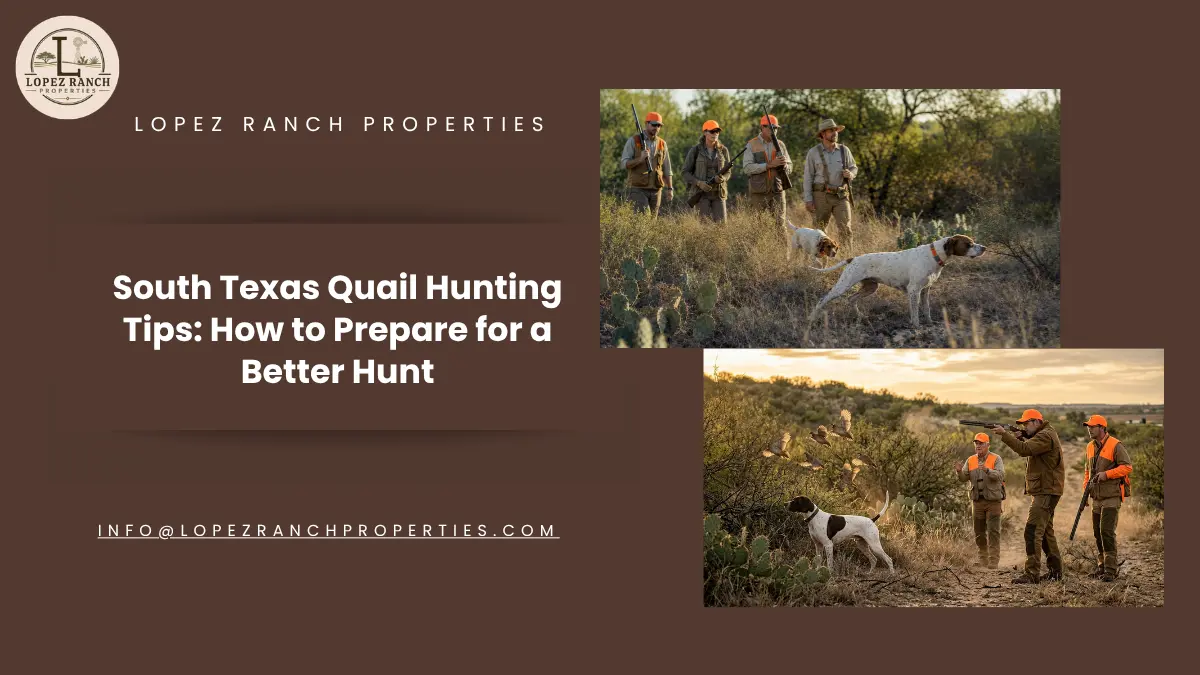
To prepare for a South Texas quail hunt, build enough walking stamina for brush country, break in your boots, pattern your shotgun, and practice a smooth mount on crossing clays. In the field, stay with your guide, let the dogs work, choose one bird from the covey, and pass on any shot that doesn’t feel safe.
Wild quail hunting looks fairly straightforward until you’re standing behind a dog on point.
The brush goes quiet. Your guide slows everyone down. You take another careful step, knowing the birds could flush at any moment.
Then the covey rises.
Several quail burst from the cover at once, each flying in a different direction. There’s noise, movement, dust, beating wings, and very little time to think. The hunters who handle that moment well are usually prepared long before arriving at the ranch.
These quail hunting tips will help you get ready for the walking, dog work, fast shooting, and field decisions that come with hunting wild birds in South Texas.
How Should You Physically Prepare for a Quail Hunt?
You don’t need to train like a competitive athlete, but you should be comfortable walking for several hours on uneven ground.
South Texas quail country can include loose dirt, thick grass, rocky patches, cactus, mesquite, thorny brush, and long senderos running through heavier cover. Even when the ground looks flat, stepping over brush and watching your footing can wear you down.
In the weeks before your hunt, start walking regularly in the boots you plan to bring. If possible, use trails, fields, or other uneven surfaces instead of walking on a treadmill every time.
A practical routine might include:
- Walking for 45 to 60 minutes at a steady pace
- Adding gentle hills or uneven trails
- Practicing in your hunting boots
- Strengthening your legs with squats, lunges, or step-ups
- Working on ankle stability and balance
- Carrying a light pack during a few walks
The goal isn’t speed. Quail hunting usually involves walking, stopping, changing direction, and moving carefully behind the dogs.
Tired legs can affect more than your comfort. Fatigue may slow your reactions, make your footing less steady, and cause your gun handling to become less disciplined late in the hunt.
What Should You Wear in South Texas Brush Country?
South Texas mornings can feel cold, then warm up quickly once the sun is overhead. Light layers usually work better than one bulky jacket.
Choose clothing that protects you from the brush without making it difficult to move or mount your shotgun.
A useful field setup may include:
- Brush-resistant pants
- A breathable long-sleeve shirt
- A light jacket or vest
- Comfortable, broken-in boots
- A high-visibility upland cap or vest
- Shooting glasses and hearing protection
- Light gloves for thorns or cold mornings
- Sunglasses and sunscreen
- A refillable water bottle
Don’t arrive with boots you’ve never worn outdoors. A pair may feel comfortable in the store and still cause blisters after an hour of walking through rough ground.
Hydration also matters in cooler weather. You may not feel as thirsty as you would during summer, but you’re still walking, carrying gear, and spending hours outside. Drink regularly and follow your guide’s advice about what to carry.
What Shooting Skills Should You Practice Before the Hunt?
Learning how to hunt quail isn’t only about finding birds. You also need to handle a shotgun safely and move it smoothly when a target appears without warning.
Sporting clays, skeet, and cross-target presentations are useful because they let you repeat the same basic movements before facing the unpredictability of a wild covey.
Practice with the shotgun you’ll carry on the hunt whenever possible.
Build a Smooth Gun Mount
Start with the shotgun held safely in a lowered position. Bring the stock to your face and shoulder in one controlled movement.
Avoid throwing the gun toward your shoulder as quickly as possible. A rushed mount can place the stock incorrectly, lift your head away from it, and pull your eyes off the bird.
Smooth movement gives you a better chance of placing the gun correctly the first time.
Keep Your Attention on the Bird
Quails don’t follow the clean, predictable line of a clay target. They may climb, turn, drop toward the brush, or cut across the hunting line.
Keep your eyes on the bird rather than checking the bead at the end of the barrel. Looking back at the shotgun often stops the natural movement of the gun and causes the shot to fall behind.
Continue the Swing
A common reason hunters miss quail shots is that they stop the shotgun as soon as they pull the trigger.
The gun should continue moving with the bird after the shot. Think of pulling the trigger as one part of the swing, not the point where everything stops.
Pattern Your Shotgun
Before the trip, shoot your intended choke and ammunition combination at a patterning board.
You’re looking for:
- An even spread of pellets
- Thin areas or large gaps
- The shotgun’s actual point of impact
- Differences between choke options
- A pattern that suits realistic field distances
Shotgun fit and a consistent pattern matter more than carrying a particular brand or gauge because someone else prefers it.
Take a Few Warm-Up Shots When Possible
If the ranch schedule allows, shooting a few clay targets before entering the field can be helpful.
For a newer hunter, it’s a chance to settle in, review safe handling, and make a few controlled mounts. For an experienced hunter, it can loosen up the shoulders and bring back the feel of tracking a moving target.
A brief warm-up won’t make wild quail predictable. It simply helps take some of the stiffness and first-shot nerves out of the morning.

How Do You Hunt Quail Behind Pointing Dogs?
For many hunters, watching a trained dog work is one of the best parts of the day.
A pointing dog searches for scent and then holds when it locates birds. Once the dog is steady, the guide brings the hunters into position and prepares for the flush.
This is the point where patience matters.
Don’t Rush the Dog
When a dog goes on point, stop and listen. Don’t move ahead of the guide or crowd the dog because you’re eager to see the birds rise.
The covey may be close beneath the cover, or it may be several yards ahead. The birds may also begin moving on the ground if they feel pressure.
A simple approach looks like this:
- Stop when the guide signals.
- Locate the other hunters and dogs.
- Confirm your safe shooting area.
- Move forward only when directed.
- Keep the muzzle controlled as you walk.
- Be ready for birds to rise from an unexpected spot.
Hunters learning how to hunt for quail sometimes focus so heavily on where the birds might be that they lose track of the people and dogs around them. Your first responsibility is always knowing what is in front of and beside you.
Stay With the Guide’s Route
Your guide may change direction, circle a patch of cover, or approach a dog from an angle that doesn’t seem obvious at first.
There’s usually a reason.
Wind affects how scent travels to the dogs. Brush edges, senderos, changes in vegetation, and open patches can also affect where quail hold or how the hunting party should approach.
Stay with the route your guide sets instead of cutting toward the place where you think the birds should be. The guide is balancing bird location, dog work, terrain, and safe positioning at the same time.
Keep a Safe Walking Line
Remain aware of the other hunters as you move toward a point. Don’t drift far ahead, step behind someone’s shoulder without warning, or move into another person’s shooting area.
Never take a low shot toward:
- A pointing or retrieving dog
- Another hunter
- The guide
- A ranch vehicle
- Brush where you cannot see clearly
If something about the shot doesn’t feel right, don’t take it. Passing on one bird is always better than forcing an unsafe opportunity.
What Should You Do When a Covey Rises?
A covey rise is designed by nature to scatter your attention.
Several birds may explode from the ground together. One cuts left, another climbs, and two more disappear toward the brush. Trying to watch every bird usually ends with a rushed mount and no clear target.
The best response is to simplify the moment.
Choose One Bird
Pick one clearly visible bird inside your safe shooting area. Keep your eyes on that bird as you mount and swing.
Don’t keep changing targets because another quail suddenly looks closer. Switching from bird to bird wastes time and makes it harder to move the shotgun with purpose.
Use this basic sequence:
- See the covey rise.
- Check your safe shooting area.
- Choose one bird.
- Mount the shotgun.
- Match the bird’s movement.
- Move through the shot.
- Keep the shotgun moving after firing.
Avoid shooting into the middle of the covey. You should always know which individual bird you’re attempting to take.
Don’t Fire at the First Flash of Movement
Wild quail are quick, but that doesn’t mean the trigger must be pulled the instant you see feathers.
Give your eyes a fraction of a second to settle on one bird. A controlled shot often happens faster than it feels because your movements are working together instead of fighting one another.
Smooth beats frantic.
Reset Before a Second Shot
If a safe second opportunity appears, start with your vision again.
Find the second bird clearly before bringing the muzzle toward it. Don’t swing the gun at a blur and hope your eyes catch up.
Treat it as a new shot:
- Find the bird
- Confirm it’s in your safe area
- Move the gun to it
- Match its flight
- Finish the shot smoothly
This small reset can make the second shot far more controlled.
Mark Every Downed Bird
After a successful shot, keep watching the bird until it reaches the ground.
Choose a clear visual marker such as a bush, cactus, tree, sendero edge, or patch of open grass. Don’t look away immediately to reload or watch another hunter.
The grass and brush can make a bird difficult to find, even if it appeared to fall in an open spot. A precise mark gives the guide and retrieving dog a much better starting point.
How Can You Make Better Quail Shots in Brush?
Better quail hunting techniques are usually built on balance, vision, and good judgment rather than pure reaction speed.
Set Your Feet Before the Flush
As you approach a dog on point, avoid crossing your legs or leaning too far forward.
Keep your knees loose and your weight balanced so you can turn in either direction. You may not have time to completely reposition once the covey rises.
Expect Different Flight Paths
Wild quail don’t give every hunter the same shot. Birds may fly:
- Straight away through an opening
- Across the hunting line
- Back toward thicker cover
- Low along a brush edge
- Up briefly before dropping toward cover
- Toward an area where no safe shot is available
Decide which directions are safe before the flush. That way, you’re not trying to solve the entire situation with a mounted shotgun.
Watch for Openings
In thick cover, your shooting window may be brief. Pay attention to gaps between bushes, senderos, and open areas beyond the dog.
This doesn’t mean aiming toward a place where you expect a bird to appear. It means understanding where you’ll be able to see clearly if one flies through.
Know When the Shot Is Gone
Not every rising bird should become a shot.
Let the quail go if it is:
- Already beyond your comfortable range
- Partly hidden by brush
- Too low over the dogs
- Crossing into another hunter’s area
- Moving toward a place you cannot see clearly
A disciplined hunter doesn’t measure success by how often the trigger is pulled.
What Common Quail Hunting Mistakes Should You Avoid?
Even experienced wingshooters can get caught up in the speed of a covey rise.
Common mistakes include:
- Watching the whole covey instead of choosing one bird
- Rushing the gun mount
- Looking at the shotgun instead of the target
- Stopping the swing at the moment of firing
- Moving the gun before clearly finding a second bird
- Crowding a dog on point
- Walking ahead of the guide
- Drifting into another hunter’s safe area
- Taking a bird that is too low or too far away
- Failing to mark where a bird falls
- Becoming less careful as the day goes on
It also helps to keep the right expectations.
You may walk for a while without seeing a feather. Then a dog locks up, the guide lowers his voice, and every step suddenly matters. That uncertainty is part of wild quail hunting.
A good day isn’t only about the final bird count. It’s also about watching the dogs work, making responsible decisions, spending time with your group, and earning the opportunities the country gives you.
What Should You Bring on a South Texas Quail Hunt?
Your outfitter should provide a trip-specific packing list, but this checklist gives you a useful starting point.
Hunting Equipment
- A familiar, properly functioning shotgun
- Legal upland ammunition
- Chokes you have patterned
- A protective shotgun case
- Shooting glasses and hearing protection
- An upland vest with room for water and shells
Clothing and Personal Gear
- Broken-in hunting boots
- Brush-resistant pants
- Layered shirts and outerwear
- A high-visibility cap or vest
- Gloves
- Sunglasses and sunscreen
- Personal medications
- A refillable water bottle
Before traveling, check the current hunting license, upland endorsement, season dates, bag limits, possession limits, county requirements, and legal methods through the Texas Parks and Wildlife Department’s Outdoor Annual.
Hunting regulations can change from one season to the next, so confirm the rules that apply to the dates and county where you’ll be hunting.
What Is a Quail Hunt Like at Lopez Ranch Properties?
Lopez Ranch Properties offers guided hunts across a private, family-owned South Texas ranch covering more than 14,000 acres.
The land was closed to the public until recently, giving guests the opportunity to hunt lightly pressured ground. The quail are 100% wild, not released or pen-raised.
Guides and trained dogs are provided during the hunt. The guides know the ranch, understand how the birds use its cover, and manage the hunting line while the dogs search and point.
That leaves guests free to enjoy the dog work, stay ready for the next rise, and spend the day hunting instead of trying to learn unfamiliar ground on their own.
Overnight groups can stay in the ranch lodges, with meals included for overnight guests. The setup works especially well for groups of friends, family hunts, corporate gatherings, and private ranch buyouts.
Because every guided hunt requires hours of physical effort from the guides and dogs, Lopez Ranch Properties has a minimum of eight hunters per guided hunt. Small one- or two-person guided bookings aren’t offered.

What Makes a Better Quail Hunt?
A better hunt begins with a few practical decisions.
Walk enough before the trip that your legs aren’t finished by midday. Wear boots you trust. Pattern your shotgun. Practice a smooth mount. Take a few warm-up shots if the opportunity is available.
Once you’re in the field, don’t try to control everything. Listen to your guide, let the dogs do their job, choose one bird, and pass when the shot isn’t right.
A wild covey may give you only a couple of seconds. Good preparation helps you use those seconds well.
Frequently Asked Questions
What is the best technique for shooting quail on the rise?
Identify your safe shooting area and choose one bird instead of watching the full covey. Mount smoothly, keep your eyes on the bird, move through the shot, and continue swinging the shotgun after pulling the trigger.
Do I need to bring my own dog to hunt quail?
No. Lopez Ranch Properties provides trained dogs and guides for its guided quail hunts. Guests should follow the guide’s directions, give pointing dogs room to work, and remain within their assigned safe shooting areas.
How physically demanding is wild quail hunting?
A wild quail hunt may involve several hours of walking through grass, brush, senderos, and uneven ground. Regular walking, broken-in boots, proper hydration, and light conditioning can make the day much more comfortable.
What gauge and load work best for quail?
A well-fitting shotgun that you can handle comfortably is more important than choosing one specific gauge. Use a legal upland load that patterns evenly from your shotgun at realistic hunting distances, and test the combination before your trip.
Can a small group book a guided quail hunt at Lopez Ranch Properties?
Guided hunts at Lopez Ranch Properties require a minimum of eight hunters. The group minimum reflects the guide time, dog handling, physical field work, and planning required to conduct a properly managed wild quail hunt.
What makes a good quail shot?
A good quail shot begins with a clearly identified bird inside your safe shooting area. Choose one bird, make a smooth mount, keep your eyes on the target, and continue swinging after pulling the trigger. Pass on birds that are too low, too far away, hidden by brush, or moving toward another hunter’s lane.
Can you hunt quail successfully without a dog?
Yes, quail can be hunted without a dog by slowly walking likely cover and working with other hunters to flush birds. However, finding wild coveys and recovering downed birds can be much harder. Lopez Ranch Properties provides trained dogs and experienced guides during its guided quail hunts.