
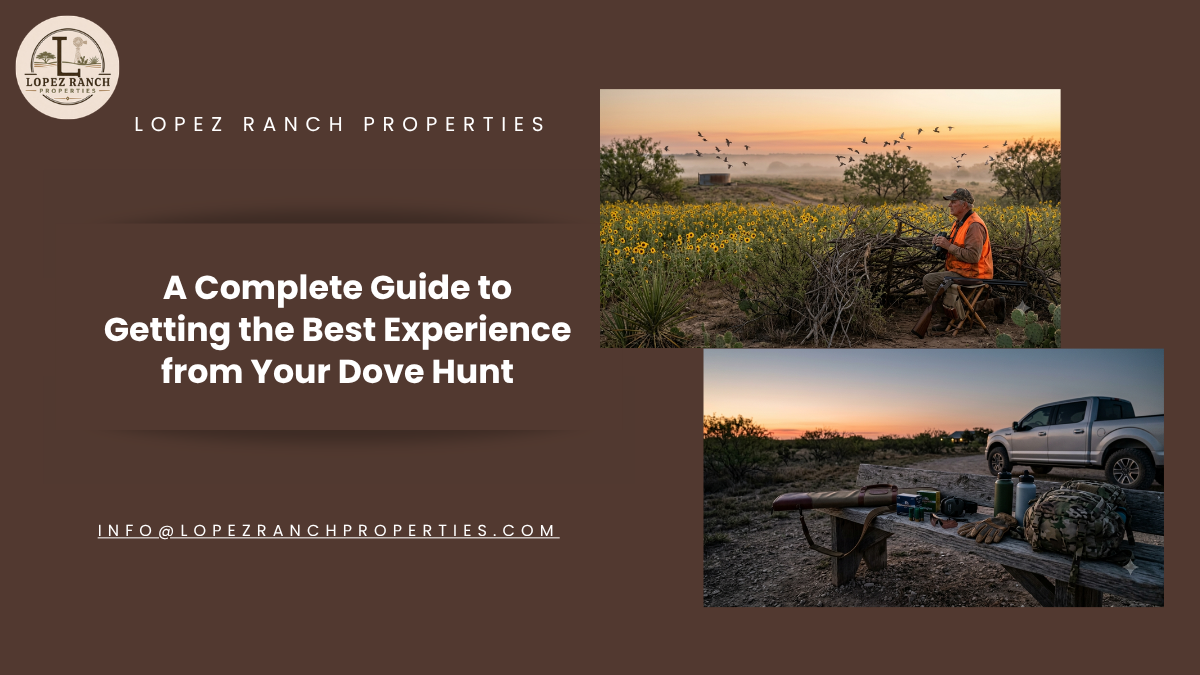
The best dove hunts come down to a few things: hunting the right field at the right time of day, staying hidden near food and water, and being ready to shoot fast. In South Texas, that means early-season mornings, plenty of shells, and knowing where the birds want to fly.
There’s a specific sound to the opening morning of dove season down here. It’s still dark and already warm, boots crunching on caliche, the first gray light coming up over the brush. Then you hear them before you see them, that fast, whistling wing beat, and a pair of doves cuts across the sendero before you’ve even chambered a shell. You swing, you miss, and you laugh, because that’s dove hunting.
A good hunt looks effortless from the outside. A stool, a shotgun, birds crossing a field at last light. But the hunters who go home with a full limit almost always did a few small things right before they ever loaded up. These are the dove hunting tips that separate a slow afternoon from the kind of hunt you talk about all year.
Best Time to Dove Hunt in South Texas
Dove season opens in early September, and those opening weeks are the best time to dove hunt. The birds haven’t been pressured yet; they’re moving in big numbers, and they’ll still cross an open tree line before they learn to be careful. Once the first cold fronts start pushing through, local birds can clear out overnight, so early really does matter.
On any given day, two windows do most of the work:
- Early morning. Birds leave the roost hungry and drop into the fields to feed. First light through about mid-morning is prime.
- Late afternoon into evening. They make one last feeding run before dark, usually swinging by water on the way. The last hour before sunset is often the fastest shooting of the day.
In the September heat, the middle of the day goes quiet for feeding, but it comes alive at water. Doves have to drink daily, so a stock tank, a windmill, or the muddy edge of a dirt tank can stack up birds when the fields are dead. If the morning flight slows, don’t pack up. Move to water.

How to Read a Dove Field Before You Set Up
This is the part that turns a decent hunter into a good one, and it’s what most guides won’t tell you for free.
Before you drop your bag, watch the field for a few minutes. Doves aren’t random; they run flight lines, the same invisible highways between where they roost, feed, and drink. Find the line, and you’ll get twice the shots for half the effort. Look for these:
- The food. In South Texas, that’s often sunflower, sorghum, or freshly worked ground. Birds pour into a hot feed field.
- The edges. Doves love to funnel along a tree line, a fence row, or the break where brush meets an open sendero. Set up on the edge, not out in the middle.
- A perch. A lone dead tree or a power line where birds stage before dropping in. Get within range of it, and you’ll stay busy.
- The wind and sun. Keep the low morning or evening sun at your back when you can; it’s on your side and in the birds’ eyes. Birds also like to land into the wind, which tells you which way they’ll cup up and slow down.
Then get low and stay still. Doves have sharp eyes and will flare off a hunter standing in the open. Kneel in the grass, tuck into brush, use whatever cover the country gives you. Movement is what busts you, not the blind.
Texas Dove Season, Gear, and What Makes a Hunt Worthwhile
Texas dove season and licensing are set each year by Texas Parks & Wildlife, and dates shift from zone to zone, so always check the current regulations and carry a valid hunting license before you head out. (We break down season dates and zones in a separate guide, so we’ll keep it short here.)
Beyond the paperwork, preparation is what carries the day. A few basics do most of the heavy lifting:
- Gun and load. A 12- or 20-gauge with an improved cylinder choke and #7½ or #8 shot handles the vast majority of dove shots. Nothing exotic needed.
- Bring more shells than you think you’ll need. Doves are small, quick, and famous for humbling good shooters. Missing is normal; nobody talks about it, but everybody does it. Extra boxes mean more birds in the bag.
- Practice before opening day. A round or two of skeet or sporting clays in August pays off more than any gadget. Doves fly erratically; the more your swing is muscle memory, the more you’ll connect.
- Dress for South Texas. Earth-tone or camo colors, real sun protection, and far more water than feels necessary. Early season here is hot, dry, and bright.
Do those things, and you’ve handled most of what makes a dove hunt worthwhile before the first bird ever flies. The rest is where you hunt.
Your Dove Hunt Experience at Lopez Ranch Properties
This is where a South Texas dove hunt stops being a checklist and becomes something you actually remember.
Lopez Ranch Properties is a private, family-owned ranch of more than 14,000 acres, about an hour from Laredo between Zapata and Hebbronville. This is real South Texas brush country, senderos, tanks, mesquite, and big open sky, and it’s been in our family for generations. It was closed to everyone but family and friends until recently, so the birds here haven’t been pressured the way public ground has.
Our guided dove hunts run over managed fields and senderos where wild mourning and white-winged doves move in the numbers this part of the state is known for. You don’t have to scout it, guess the flight lines, or hope you picked the right spot; that’s our job. You show up, we put you on the birds, and you shoot.
For groups who stay over, the hunt is only half of it. There’s the lodge, home-style meals, sunset drinks around the fire pit, and the easy pace of a working ranch at the end of a good day. It’s built just as well for corporate retreats and private group buyouts, where the hunting is one part of a bigger experience: good food, good people, and a piece of Texas most guests have never seen.
One thing to know before you book: our guided hunts are run for groups, with a minimum of 8 hunters per hunt. Guiding a quality hunt takes real time and effort on our end; this isn’t a drive-up, shoot-and-leave operation, and the 8-hunter minimum is what keeps it worth doing right for everyone in the field.

What Sets a Lopez Ranch Hunt Apart
There’s no shortage of places to shoot a dove in Texas. What’s rare is the whole experience done well: lightly hunted private ground, birds that are actually there, guides who know the property, and a lodge worth staying in when the guns are put away. A lot of outfits give you one of those. We’re built to give you all of them, on land that stays private and well-managed year after year.
That’s the difference between filling a limit and having a hunt you plan the next trip around before you’ve even left.
Conclusion
A great dove hunt isn’t luck. Go early in the season, hunt the mornings and evenings, read the flight lines, set up on food and water, bring more shells than feels reasonable, and stay hidden. Handle those, and the birds take care of the rest, especially when you’re on ground that’s managed for them and guided by people who hunt it every season.
Frequently Asked Questions
What is the best time of year for dove hunting in South Texas?
Early September, right when the season opens. The birds are unpressured and moving in strong numbers before the first cold fronts arrive. Morning and late-afternoon flights are the most productive windows, with water sources holding birds through the midday heat.
Do I need my own gear for a dove hunt?
Most hunters bring their own shotgun and shells: a 12 or 20-gauge with an improved cylinder choke works well. Reach out ahead of your hunt at Lopez Ranch, and we’ll walk you through exactly what to bring for the day.
How many birds can I expect to take on a guided hunt?
That depends on conditions and your shooting, but on a good South Texas day, limits are very reachable. Daily bag limits are set by Texas Parks & Wildlife (commonly 15 birds), so confirm the current limit for your hunt date.
Can groups or corporate parties book a dove hunt?
Yes, groups and corporate parties are exactly who we’re set up for. Guided hunts run with a minimum of 8 hunters, and we offer lodge stays, meals, and full private buyouts for corporate retreats.
When does dove season start in Texas?
Texas dove season typically opens in early September, though exact dates vary by zone and change each year. South Texas falls in its own zone with its own opening date, so always confirm the current season with Texas Parks & Wildlife before you plan your hunt.
What are the best tips for hunting doves?
Set up where birds already want to be near food, water, or along a flight line and stay hidden using natural cover. Hunt the morning and evening feeding flights, keep the sun at your back, and bring plenty of shells, because doves are fast and easy to miss. Early-season mornings on lightly pressured ground, like the private fields at Lopez Ranch, give you the best shot at a full limit.